Sublimation blanks: what to stock and how to print them
12 June 2026 · By Graphic Supplies · Updated 17 June 2026
Where sublimation fits
Sublimation is one of the most rewarding processes a small print business can offer. It turns blank, everyday items into personalised products with full colour images that are part of the surface rather than sitting on top of it. For birthdays, corporate gifts, sports teams and souvenirs, the demand is steady and the margins can be good.
The key to a smooth sublimation operation is understanding two things: which blanks are worth stocking, and how to print each type reliably.
How sublimation actually works
Sublimation ink is printed onto a transfer paper, then pressed against the blank under heat and pressure. At around 200 degrees Celsius the ink turns directly into a gas, which bonds into the surface and reopens the pores of polyester or a special coating. As it cools, the colour is locked in.
Two facts follow from this. First, sublimation only works on polyester fabric or items with a polymer coating, so cotton and bare ceramics will not take the image. Second, because the ink becomes part of the surface, the result will not crack or peel like a sticker can.
Blanks worth stocking
You do not need a huge range to start. A focused selection of popular, reliable blanks serves most customers.
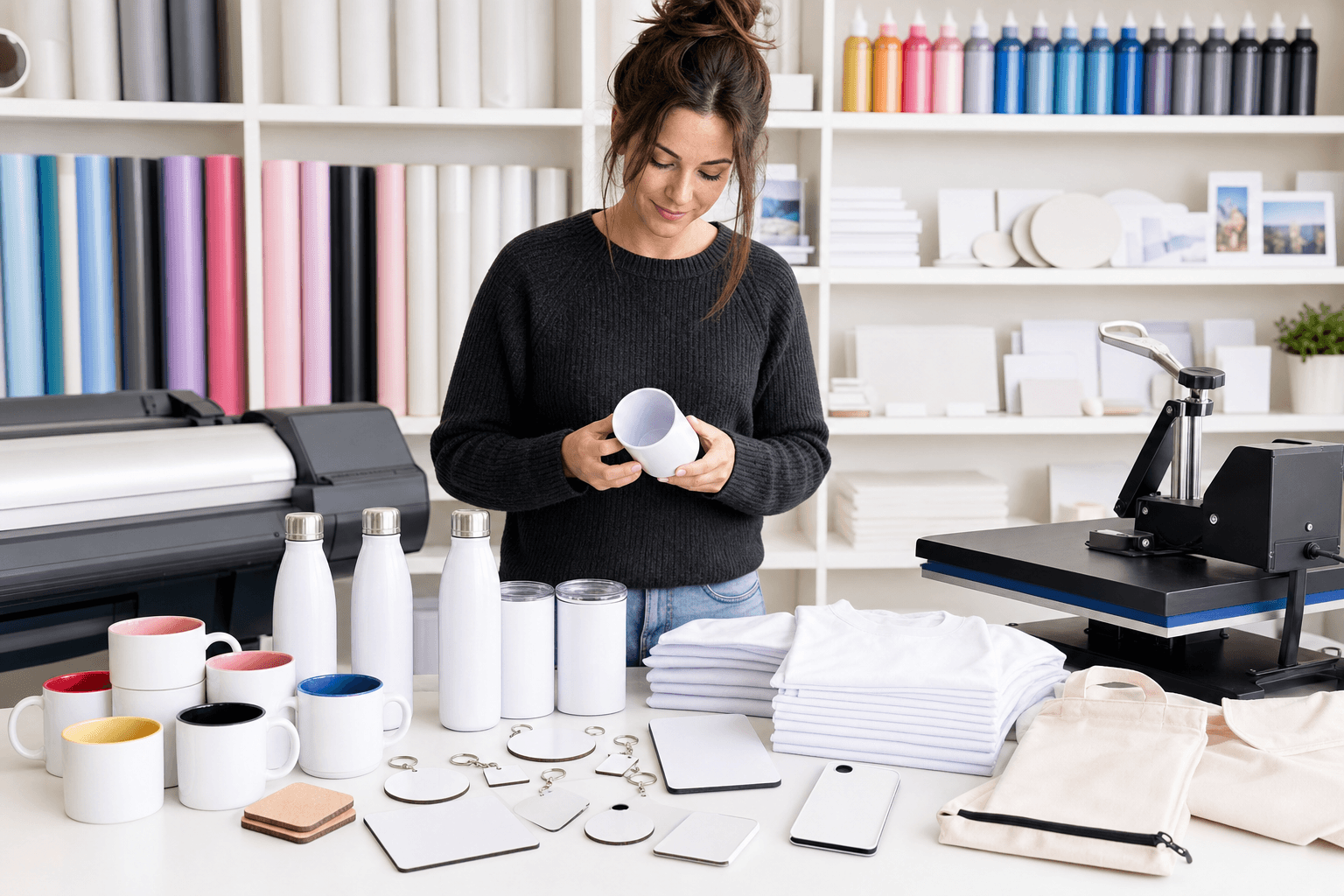
Mugs
Coated ceramic mugs are the classic sublimation product. They are affordable, sell well, and a mug press makes them quick to produce. Stock a standard white mug as your core line and add a colour rim or magic mug variant for variety.
Garments
Polyester t shirts, sports jerseys and performance wear sublimate brilliantly with bright, durable colour. Remember that high polyester content gives the best result, and that light coloured garments show the print best, since sublimation cannot print white.
Hard substrates
Coated metal photo panels, slate, glass cutting boards, phone cases, keyrings and coasters all take sublimation well. These higher value items often carry better margins than mugs and t shirts.
Soft goods
Mouse mats, cushion covers, lanyards and bags round out a gift range and are easy to press flat.
Getting the settings right
Each blank type has its own recipe of time, temperature and pressure, and the supplier's guidance is your starting point. As a rough guide, garments press hotter and faster, while mugs need longer in a dedicated mug press.
Three variables decide your results. Temperature must be high enough to convert the ink but not so high it scorches. Time must be long enough for full transfer without yellowing. Pressure must be firm and even so the paper stays in full contact.
Keep a simple log of the settings that work for each blank. It saves guesswork and protects you from wasted stock.
Habits that prevent ruined products
Most sublimation failures come from a few avoidable mistakes.
Moisture is a common enemy. Polyester and paper both hold humidity, which causes colour shifts and blurring. In a humid climate like Mauritius this matters, so store blanks and paper in a dry place and consider a quick pre press to drive off moisture from garments.
Ghosting, where a faint double image appears, happens when the paper shifts during or after pressing. Tape the transfer firmly and lift the press cleanly.
Uneven pressure leaves patchy areas, so make sure mug elements and platens are in good condition. And always mirror your image before printing, or your text will come out backwards.
Colour and design notes
Sublimation colours can look duller on the printed paper than on the final product, because they brighten when pressed. Build a proper colour profile and run test pieces so you can promise customers an accurate result. Avoid designs that rely on white areas, since white is simply the blank showing through.
Pricing for profit
Because the consumables are modest and the perceived value is high, personalised items can carry healthy margins. Factor in your blank cost, ink and paper, press time and a fair markup for the customisation. Bundles, such as a set of matching mugs or team shirts, lift the average order value.
The takeaway
Sublimation rewards a tidy, methodical approach. Stock a focused range of proven blanks, learn the right settings for each, and protect your materials from moisture and movement. Do that consistently and you will turn simple blanks into products customers are happy to pay a premium for.
A practical specification guide within Chemtech Group. Explore the wider Chemtech Group ecosystem.